 blog
Is There Reliable Mechanical Repair in Sarasota?
Last Updated: October 29, 2026
Quick Summary
Reliable mechanical repair in Sarasota means a shop diagnoses the fault before quoting a fix, explains what it found in plain language, and stands behind the parts and labor afterward. At Gridline Auto, diagnostics is the starting point, not an upsell, so you pay to confirm the cause rather than to replace parts by elimination.
- Confirm the shop is registered under the Florida Motor Vehicle Repair Act before handing over your keys.
- A fair estimate separates the diagnostic fee, itemized parts, and labor hours at the posted rate.
- Independent shops commonly offer 12 months or 12,000 miles on labor, though terms vary by shop.
- Ask whether the diagnostic fee is credited toward the repair if you authorize the work.
- Dealers often have the longest waits for non-warranty work; independent shops usually move faster on simple jobs.
Table of Contents
- What Reliable Mechanical Repair in Sarasota Actually Means
- Signs of a Reliable Mechanic: What to Check Before You Hand Over the Keys
- Average Cost of Car Diagnostics and How Repair Estimates Are Built
- The Vehicle Repair Insurance Claims Process, Step by Step
- Comparing Mechanical Repair Options: Independent Shops, Dealers, and Mobile Mechanics
- Request an Estimate from Gridline Auto
- Frequently Asked Questions
What Reliable Mechanical Repair in Sarasota Actually Means
Reliable mechanical repair in Sarasota means a shop diagnoses the fault before quoting a fix, explains what it found in plain language, and stands behind the parts and labor afterward.
At Gridline Auto, diagnostics is the starting point, not an upsell.
The stakes are real. The Cox Automotive Service Study describes a U.S. auto care industry worth nearly $400 billion, which means plenty of shops competing for your keys.
Find the problem. Fix it right.
Signs of a Reliable Mechanic: What to Check Before You Hand Over the Keys
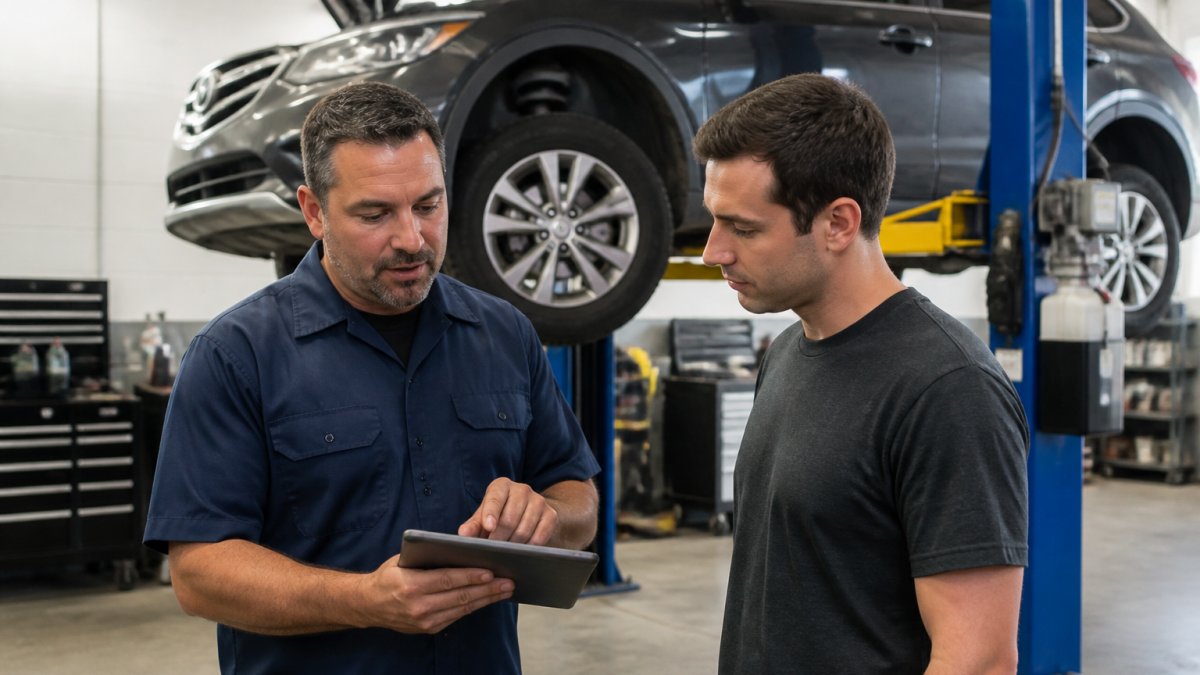
The clearest sign of a reliable mechanic is a shop that puts the diagnosis in writing before anyone touches a wrench. Ask four questions before you hand over the keys:
- Who works on the car? Ask whether technicians hold current certifications and whether the shop handles your make and model.
- What does the estimate cover? A real estimate lists parts, labor, and the diagnostic fee separately.
- What happens if the diagnosis changes? The shop should call you before adding work, not after.
Credentials, Reviews, and the Florida Repair Registration
Registration is a legal baseline, not a quality badge. The Florida Motor Vehicle Repair Act requires businesses paid to repair motor vehicles owned by others to register with the Florida Department of Agriculture and Consumer Services.
For a parallel look at how to vet a body shop, see our guide on how to find the best local auto body repair for your vehicle.
Average Cost of Car Diagnostics and How Repair Estimates Are Built
Diagnostic pricing varies by shop, vehicle, and how deep the fault sits, so no single figure applies across the board. What you can control is how the estimate is built. A fair estimate separates three lines: the diagnostic fee, the parts, and the labor hours at the shop's posted rate.
What Diagnostic Fees Typically Cover
A diagnostic fee is not a repair estimate. It pays for the technician's time to reproduce the symptom, scan the modules, and test the flagged circuit or component. Diagnostic fees vary by shop and by the complexity of the fault. Ask before you drop the keys whether the fee is waived or credited if you authorize the repair, because the answer changes the true cost of saying no.
Compare posted labor rates across shops, not the diagnostic fee alone.
How Labor Hours Are Calculated
Labor is not clock time. Shops price most jobs from a labor time guide that assigns a standard number of hours to a specific repair on a specific vehicle. Labor time guides assign a standard number of hours to a repair, which may differ from the time a technician actually spends on the job. Ask the shop to show you the labor time and the hourly rate applied.
Reading a Written Estimate Line by Line
A written estimate should show:
- Diagnostic fee as a separate line, with a note on whether it is credited toward the repair.
- Parts itemized by description and part number, with OEM, aftermarket, or remanufactured clearly labeled.
- Labor as hours times the posted rate, not a lump sum.
Watch out: a quote that lumps everything into one number hides the labor rate, which is the line most likely to move. Ask for the breakdown before you approve anything.
The Approval and Supplement Process
A reliable shop calls you before the bill changes. If the technician finds a seized bolt, a cracked housing, or a second failed component while the car is apart, the shop should document the finding, price the supplement, and get your approval before proceeding. Get that approval in writing, even a text message, to protect yourself if the final invoice drifts from the original estimate.
Parts availability shapes both cost and turnaround in 2026. According to IMR Automotive Research, repair shops named finding affordable parts (20.6%) and sourcing necessary parts (17.7%) as primary challenges, which directly affects how long a repair takes. Ask whether the shop uses OEM, aftermarket, or customer-supplied parts, because that choice can affect both the price on the estimate and the warranty that backs it.
The Vehicle Repair Insurance Claims Process, Step by Step
The vehicle repair insurance claims process moves through five stages: report the damage, get an adjuster inspection, receive a written estimate, approve or dispute the scope, then authorize repairs. Collision damage usually runs through your insurer; mechanical wear typically does not.
- File the claim and get a claim number.
- Schedule the adjuster inspection and attend it if you can.
- Collect the written estimate and compare it against the shop's own findings.
- Approve the scope in writing, or ask the shop to document supplements for hidden damage.
- Authorize repairs and confirm the warranty terms before pickup.
Comparing Mechanical Repair Options: Independent Shops, Dealers, and Mobile Mechanics
Three options cover most repairs, and each fits a different situation. Independent shops generally offer the most flexibility on diagnosis and scheduling, dealers carry brand-specific tooling and software, and mobile mechanics handle jobs that do not need a lift.
| Option | Best For | Trade-Off | Warranty Typical | Parts Policy |
|---|---|---|---|---|
| Independent shop | Mixed mechanical and body work, out-of-warranty vehicles | Varies by shop's tooling and diagnostic software subscriptions | Commonly 12 months / 12,000 miles on labor; varies by shop | Often lets you choose OEM, aftermarket, or customer-supplied |
| Dealer service center | Warranty and brand-specific software, recalls, complex electronics | Higher labor rates, longer waits, less flexibility on parts | Backed by the manufacturer's parts and labor warranty | OEM parts; customer-supplied parts usually refused |
| Mobile mechanic | Simple jobs, no tow needed, fleet and driveway work | Limited to work done on site; no lift-heavy jobs | Varies widely; get it in writing before booking | Often aftermarket; confirm brand and warranty |
A Practical Checklist for Evaluating Any Shop
Before you commit, run every option through the same five checks:
- Registration and credentials. Confirm the shop is registered under the Florida Motor Vehicle Repair Act and that at least one technician holds current ASE certification in the area of your repair.
- Written estimate before work. The shop should put the diagnostic fee, parts, labor hours, and fees in writing and get your approval before starting.
- Warranty terms in writing. Ask for the parts warranty and the labor warranty separately, plus what voids each. Ask for the warranty terms on parts and labor, and what voids each.
- Parts policy. Ask whether the shop uses OEM, aftermarket, or remanufactured parts, whether you can supply your own, and how each choice affects the warranty.
- Communication pattern. Read reviews for how the shop handles callbacks, missed deadlines, and billing disputes, not just star averages. A shop that answers the phone after the sale is the one that stands behind the work.
Which Option Fits Your Vehicle and Repair
Match the option to the job, not to habit. A check engine light on a daily commuter usually belongs at an independent shop with diagnostic equipment. A warranty-covered transmission repair belongs at the dealer. Brake service, wheel bearings, and routine maintenance fit almost anywhere competent. A mobile mechanic makes sense for a battery, alternator, or starter on a vehicle that will not start, but not for a job that needs a lift or a alignment rack.
Emergency, Same-Day, and After-Hours Availability
Availability is part of reliability. Ask each option three questions before an emergency forces the issue: Do you offer same-day diagnostics? Is there an after-hours drop-off or key box? What is the typical turnaround for a brake job or a no-start diagnosis?
Workforce pressure affects all three. The 2026 Voice of Technician Report indicates shops across the country are struggling to meet fundamental workforce needs, which can stretch turnaround times.
One shop for the whole vehicle.
Request an Estimate from Gridline Auto
Bring us the symptom and we will tell you what the diagnosis requires, in writing, before any repair begins. Our process connects body, paint, and mechanical work under one roof, so a collision repair and the mechanical fault behind it get handled in a single visit.
- Diagnostics performed before repairs, so the estimate reflects the actual cause
- Clear communication on what needs fixing now versus what can wait
- Precision in fit, finish, and color matching on every body and paint job
Get started with Gridline Auto and tell us what your vehicle needs.
Frequently Asked Questions
How do I find a trustworthy mechanic for my car?
Start with the signs of a reliable mechanic: current ASE certification, a Florida Motor Vehicle Repair Act registration through FDACS, and a written estimate before work begins. Read reviews for patterns, not just star counts. Ask whether diagnostics come before repairs and whether the shop explains what it found. A shop that answers those questions plainly is usually the one worth your keys.
What does the average cost of car diagnostics look like, and will I pay for it?
Diagnostic fees vary by shop, vehicle, and how deep the fault goes, so ask for the diagnostic charge up front and whether it is credited toward the repair. The fee covers the time to connect scan tools, test circuits, and confirm the cause. A shop that diagnoses before quoting avoids replacing parts on a guess. Gridline Auto performs diagnostics before repairs so the estimate reflects the actual fault, and you can request an estimate through its website for current pricing.
Do local repair shops handle the vehicle repair insurance claims process?
Many do. The vehicle repair insurance claims process usually starts with the shop documenting damage, photographing it, and submitting an estimate to your insurer. The insurer may send an adjuster or approve the estimate directly, and supplemental claims cover damage found after disassembly. Ask the shop whether it communicates with the insurer on your behalf and how it handles supplements. Gridline Auto offers insurance claims processing alongside body and mechanical work.
Are mobile mechanics in Sarasota reliable for mechanical repair?
Mobile mechanics suit battery swaps, brake pads, and diagnostic scans, but they are limited by what fits in a van and what can be done in a driveway. Transmission repair, engine repair, wheel bearings, and collision-related work need a lift and a shop. For daily commuters in Osprey and Sarasota, a fixed shop with diagnostic equipment and a service area covering both cities is the safer choice for anything beyond light maintenance. Confirm the mechanic's credentials and warranty before booking.