 how-to
Why Check Engine Lights Return: Diagnosing a Recurring Fault
Last Updated: October 30, 2026
Quick Summary
A check engine light usually returns because the underlying fault was never fully fixed, or the codes were cleared before the system could prove the repair worked. Clearing a code erases the evidence but repairs nothing, so the computer simply re-detects the same fault once its monitors run again.
- A permanent code does not vanish when you press clear; the computer holds it until it verifies the repair itself.
- Most vehicles need several drive cycles, not a single trip, before the computer re-runs every monitor.
- A flashing check engine light signals a misfire severe enough to damage the catalytic converter, so stop driving when safe.
- Same code returning points to an incomplete fix; a new but related code points to a system-level issue.
- A repair is verified only when all monitors read ready with no stored or pending codes.
Table of Contents
- Why Your Check Engine Light Returned After Repair
- Reading Check Engine Light Diagnostic Codes Before You Clear Anything
- Intermittent Check Engine Light Causes: Why the Light Turns On and Off
- How Long to Drive After Clearing Check Engine Light to Confirm a Fix
- Check Engine Light Returned After Repair: A Step-by-Step Diagnostic Process
- Request a Diagnostic Estimate at Gridline Auto
- Frequently Asked Questions
Why Your Check Engine Light Returned After Repair
A check engine light that returns after a repair usually means the underlying fault was never fully fixed, or the system was cleared before it could prove the fix worked.
A check engine light is a symptom, not a diagnosis. Clearing it does not repair anything.
Below, we break down why check engine lights return, how to read codes properly, and how to confirm a fix.
Reading Check Engine Light Diagnostic Codes Before You Clear Anything
Check engine light diagnostic codes are the fault records your car's computer logs when something drifts out of range. Read them before you clear them, clearing wipes the evidence.
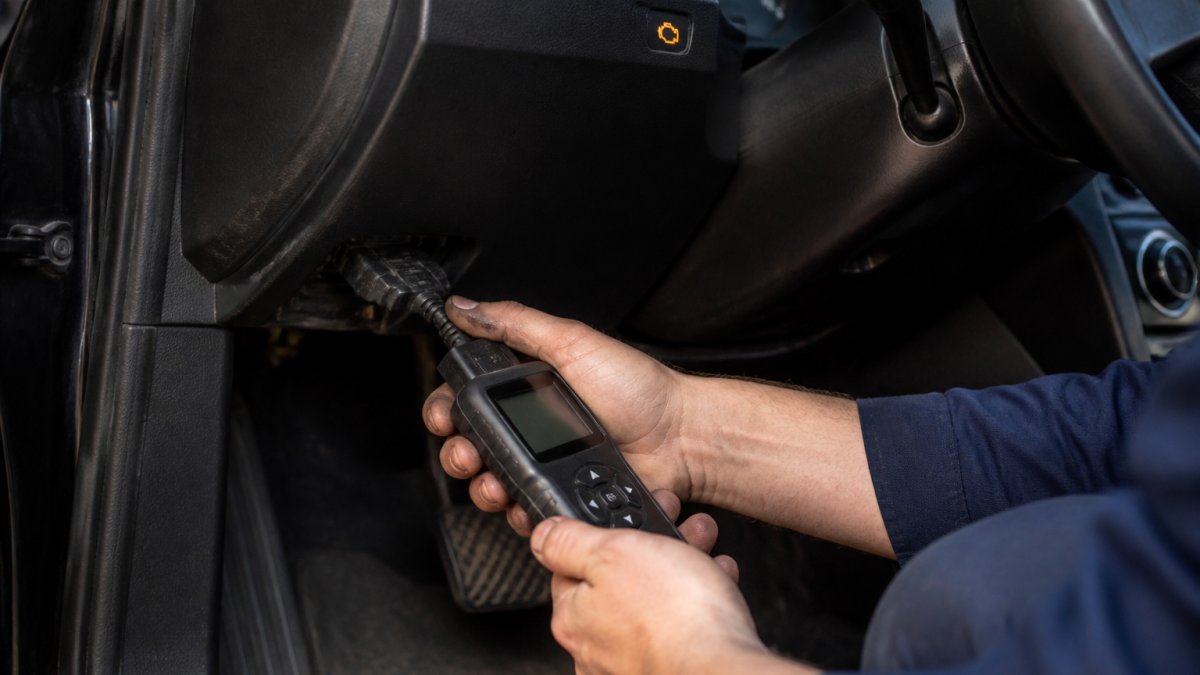
When you plug in an OBD-II scanner, you will typically see three kinds of codes:
- Stored codes: confirmed faults the computer has already logged
- Pending codes: faults seen once but not yet confirmed across two drive cycles
- Permanent codes: emissions-related faults the computer keeps until it verifies the repair itself
That last category trips people up. A permanent code does not vanish when you press "clear." The computer holds it until it verifies the problem is gone.
Watch out: clearing codes to "see if it comes back" destroys the freeze-frame data that tells a technician when and how the fault happened, often the fastest path to the real cause.
Intermittent Check Engine Light Causes: Why the Light Turns On and Off
Intermittent check engine light causes are the hardest to pin down because the fault only shows up under specific conditions. A loose gas cap, a failing oxygen sensor, or a chafed wire can trigger the light one day and behave perfectly the next.
Common culprits behind a light that turns on and off include:
- A loose or faulty gas cap that breaks the seal on the evaporative emissions system
- An oxygen sensor drifting in and out of range as it heats up
- A mass airflow sensor sending shaky readings under load
- Worn spark plugs or ignition components causing a light misfire
- Loose wiring or a poor electrical connection at a sensor plug
An intermittent fault is not necessarily a minor fault. A misfire that comes and goes can still damage a catalytic converter, so do not wait for the light to stay on before acting.
The Conditions That Make a Fault Appear and Disappear
An intermittent fault is usually a component or connection that only fails inside a narrow window of temperature, vibration, moisture, or load, which is why the light can stay off for a week and then return on the same commute. The table below shows the conditions technicians watch and what each points toward.
| Condition | What it can expose | What to note |
|---|---|---|
| Cold start vs. fully warmed engine | Oxygen sensor heater circuits, coolant sensor drift, EVAP seals that only leak when cold | Whether the light sets within the first few minutes or after warm-up |
| Vibration and rough roads | Chafed wiring, loose connectors, failing ignition coils | Whether bumps or acceleration trigger the light |
| Moisture and humidity | Cracked ignition components, corroded pins, EVAP leaks after rain | Weather and recent car washes |
| Fuel level | EVAP system faults that only appear near a full or near-empty tank | Fuel gauge reading when the light sets |
| Engine load | Mass airflow and misfire faults that appear under acceleration or climbing | Speed, gear, and throttle position |
| Ambient temperature | Sensors that drift only in heat or only in cold | Outside temperature at the time |
How to Document an Intermittent Fault
Because the fault may not be present when a technician inspects the car, your notes become the evidence. Keep a simple log for at least a week:
- Date, time, and outside temperature when the light appears
- Fuel level at the time
- Driving conditions, idling, city, highway, climbing a grade, towing
A pattern often emerges: a fault that only sets on cold damp mornings points toward ignition or connection issues, while one that appears only on long highway climbs points toward airflow or load-related faults. That pattern is often more useful than a single code.
When an Intermittent Light Becomes Urgent
A steady light that comes and goes is usually safe to drive short distances while you gather information. A flashing check engine light is different, it signals a misfire severe enough to damage the catalytic converter, so reduce speed and stop driving as soon as it is safe. Treat any intermittent light with rough running, overheating, or noticeable power loss as a prompt-service issue.
How Long to Drive After Clearing Check Engine Light to Confirm a Fix
How long to drive after clearing a check engine light depends on the repair, but most vehicles need several drive cycles, not a single trip, before the computer re-runs every monitor. Plan on a mix of city and highway driving over a few days.
The computer runs readiness monitors, self-tests for the emissions system, oxygen sensors, catalyst, and more. Each monitor needs specific conditions to run:
- A cold start followed by a warm-up
- Steady cruising at highway speed
- A period of idling
If you clear codes and only drive around the block, you have not proven anything. The light may stay off simply because the monitor never ran.
Clearing a Code Is Not the Same as Fixing It
This distinction explains most returning lights. Pressing "clear" erases stored and pending codes and resets readiness monitors to "not ready." You have not repaired anything or proven the fix worked, the computer now re-runs its tests from scratch.
There are three code states to keep straight:
- Pending codes are faults seen once but not yet confirmed across two drive cycles. They can clear themselves if the condition does not repeat.
- Stored (confirmed) codes are faults the computer has seen enough times to log. These are what turn on the light.
- Permanent codes are emissions-related faults the computer keeps until it verifies the repair on its own. A scanner's clear function does not remove them.
A repair is only verified when the original code does not return, the relevant monitor completes, and the permanent code clears after the computer's own checks. Until then, the light staying off is not proof of anything.
A Post-Repair Verification Sequence
Use this sequence after any repair that was supposed to fix a check engine light:
- Confirm the repair physically. Check that connectors are fully seated, vacuum lines are connected, and nothing was left loose.
- Clear codes only after the repair is complete. Note the codes first so you have a record.
- Complete a full drive cycle. Follow the manufacturer's procedure if available; otherwise use a mix of cold start, warm-up, steady highway cruise, and idle.
- Re-scan for codes and check monitor status. All supported monitors should read "ready" or "complete," with no pending or stored codes.
- Watch for the light over the next several days. A light that returns within a few drive cycles usually means the root cause was not fully addressed.
Why the Light Comes Back After a "Fix"
A returning light after repair usually falls into one of four patterns:
- The same code returns. The original cause was misdiagnosed or only partially repaired, for example, one bad ignition coil replaced while a second was failing.
- A related code appears. The repair addressed a symptom, and a connected component is now out of range.
- A pending code never confirmed. The fault was intermittent and the monitor has not yet re-run, so the light may return once conditions repeat.
Matching the new code to the original repair is the fastest way to tell which pattern you are in. Same code points to an incomplete fix; a new but related code points to a system-level issue needing fresh diagnosis.
Preventing a Comeback
The goal after any check engine light repair is a completed drive cycle with all monitors ready and no codes stored or pending, the only reliable evidence the fix held. If the light returns after that, the next step is a structured re-diagnosis, re-scan, compare codes, review freeze-frame data, and test the suspect component directly, rather than replacing another part on a guess.
Check Engine Light Returned After Repair: A Step-by-Step Diagnostic Process
A check engine light that returned after repair needs a fresh, structured diagnosis, not another round of parts guessing. Follow these steps in order.
- Re-scan for stored, pending, and permanent codes. Write down every code, not just the first one.
- Compare the new codes to the original repair. Same code points to an incomplete fix. A new code points to a related system.
- Check the basics first. Inspect the gas cap, sensor connections, and vacuum lines before replacing anything.
- Review freeze-frame data. Note the engine temperature, speed, and load when the fault set.
- Test the suspect component directly. A technician checks voltage and signal rather than swapping parts.
- Repair the root cause, then clear codes. Only clear after the fix is confirmed.
- Run a full drive cycle. Verify every readiness monitor completes and the light stays off.
That final step is where comebacks get prevented. If a shop hands back your keys without a completed drive cycle, the light has not been verified as fixed.
If your light came back and you want it diagnosed properly the first time, see how our automotive diagnostics and mechanical repair service works.
Request a Diagnostic Estimate at Gridline Auto
A recurring warning light is a diagnostic problem, and it deserves a real diagnosis rather than a coin flip on a new part.
The shop aims for clear communication about what needs fixing, with diagnostics performed before repairs to help avoid unnecessary work.
Ready to get the light diagnosed? Tell us what your vehicle needs and request an estimate from Gridline Auto LLC today.
Frequently Asked Questions
Why does my check engine light come back after a repair?
The most common reason is that the repair addressed a symptom rather than the root cause. For example, replacing an oxygen sensor when the real problem is a vacuum leak or a wiring fault will clear the code temporarily, but the fault will re-trigger. It can also happen if the repair did not fully resolve the issue, if the code was cleared without a proper drive cycle to verify the fix, or if a new but related fault developed. A proper post-repair verification with an OBD-II scanner and a complete drive cycle is the only way to confirm the fix holds.
Can a check engine light turn off and then come back on by itself?
Yes. A steady check engine light can turn off on its own if the fault does not recur after a certain number of drive cycles. This is common with intermittent faults like a loose gas cap, a faulty electrical connection, or a sensor that only fails under specific conditions. The light turning off does not mean the problem is solved; it means the fault has not been detected recently. The underlying issue is still there and will likely return, so it is worth having the stored codes read before the light comes back.
How do I reset the check engine light without a scanner?
You can disconnect the negative battery cable for about 15 to 30 minutes to clear the codes, but this also resets the readiness monitors and can erase useful freeze-frame data. A better option is to use an OBD-II scanner to read and clear the codes properly. However, clearing the light without fixing the underlying fault is a temporary fix at best; the light will return once the fault is detected again. If you are not sure what the code means, have a professional diagnose it before clearing anything.
Do you have to drive 100 miles to reset the check engine light?
There is no fixed mileage that guarantees a reset. The engine control module needs to see a specific set of conditions, called a drive cycle, before it will turn off the light or set readiness monitors. A complete drive cycle typically involves a cold start, idling, acceleration, steady cruising at various speeds, and deceleration. It can take anywhere from 10 to 50 miles of mixed driving, and sometimes more, depending on the vehicle. Driving 100 miles is a rough rule of thumb, not a requirement.